
Local SEO vs Google Ads: Which Actually Brings More Local Customers in 2026?
For local service businesses, the question is rarely whether Google matters. The real question is where the next marketing dollar should go: local SEO services that build visibility over time, or Google Ads that can produce leads almost immediately.
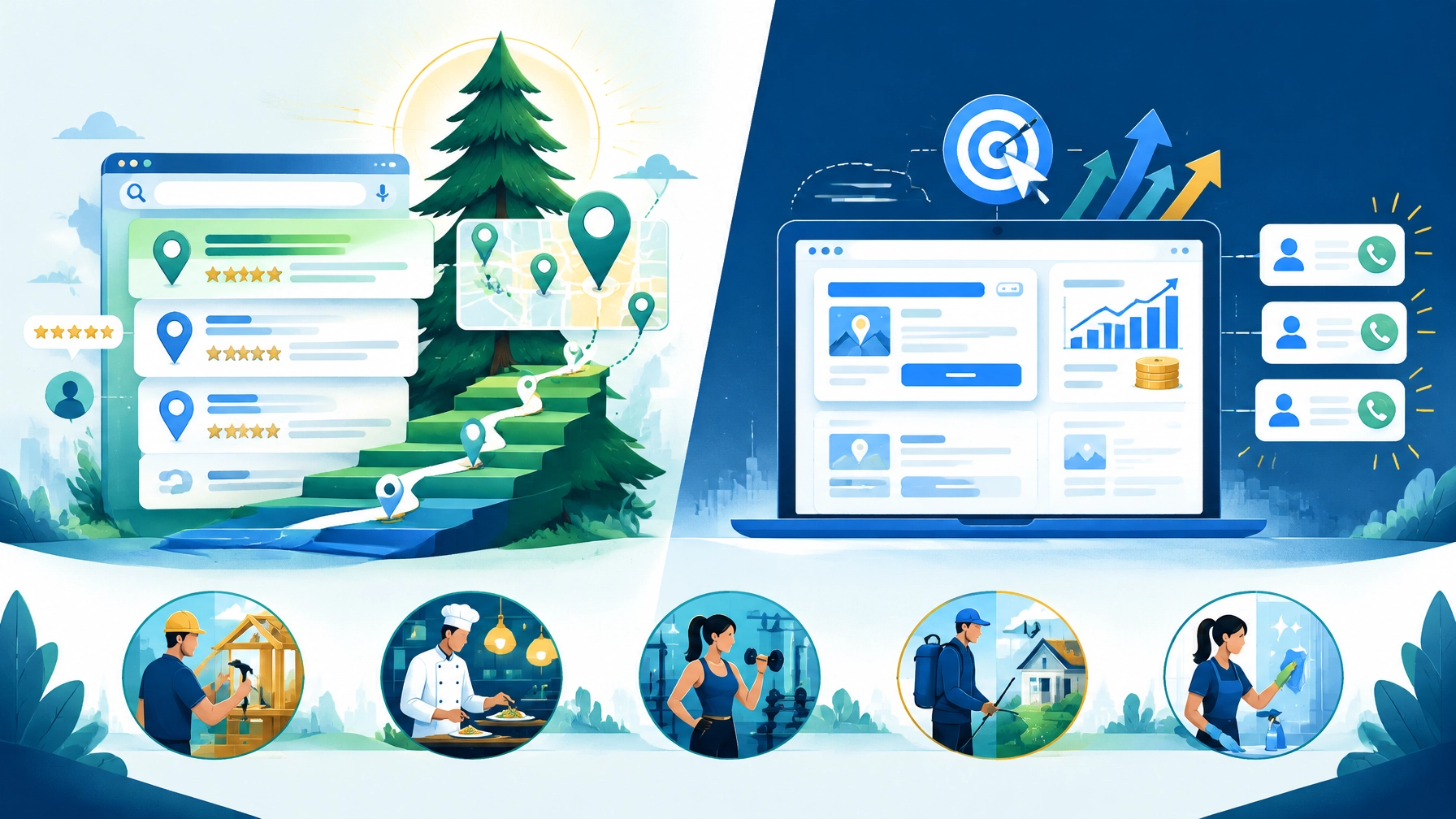
The candid answer is that neither channel wins in every situation. Google Ads is usually faster and more predictable in the short term. Local SEO typically creates stronger long-term value because the visibility, content, reviews, and website improvements continue working after the initial investment. For most contractors, restaurants, fitness centers, pest control companies, and cleaning services, the strongest strategy is not SEO versus Google Ads. It is knowing when to use each, and how to make both lead to a website that converts.
1. Google Ads buys immediate attention; local SEO builds an acquisition asset
Google Ads places a business in front of people who are actively searching for a service. A contractor can bid on “emergency plumber near me,” while a fitness center can target “gym membership in [city].” Once the campaign is approved, the business can begin receiving impressions, calls, and website visits as soon as there is enough search demand and the ads are competitive.
Local search engine optimization works differently. It improves the business’s ability to appear in unpaid search results and local listings by strengthening the website, service pages, business information, reviews, local relevance, and overall authority. Google states that local rankings are primarily influenced by relevance, distance, and prominence, and that businesses cannot simply pay for a better organic local ranking.
That distinction matters. Google Ads is a rented storefront in a busy commercial district. Local SEO is the process of building a permanent storefront that customers recognize and trust. The rental can produce traffic quickly, but the property becomes more valuable as the business improves it.
2. The cost structures are fundamentally different
Google Ads generally charges through an advertising auction. A business pays when someone clicks an ad or, with certain local advertising products, when it receives a qualifying lead. Costs vary significantly based on the service, location, competition, season, and quality of the campaign.
Recent industry benchmarks illustrate the range. WordStream’s 2026 Google Ads benchmark reports an average cost per lead of approximately $66.69 across industries, while home-service campaigns can be considerably higher. Those figures are directional rather than guaranteed. A highly competitive roofing market may cost far more than a less competitive cleaning market.
Local SEO does not charge a fee for every organic click, but it is not free. A company may invest in technical improvements, service-area pages, content, review development, citations, strategy, reporting, and ongoing maintenance. The cost is front-loaded and recurring rather than attached directly to every visitor.
This creates two different financial models:
- Google Ads: Variable media cost that rises with traffic and stops producing paid visibility when the budget stops.
- Local SEO: Ongoing investment in assets that can continue generating organic traffic and leads over time.
The correct comparison is not “free SEO versus expensive advertising.” It is short-term media spend versus long-term marketing infrastructure.
3. Google Ads usually produces leads faster
Businesses that need customers within days or weeks should generally consider Google Ads first. Paid search can promote a new service, fill unused appointment capacity, support a seasonal offer, or help a new location gain immediate exposure.
That speed is especially valuable for businesses with high margins or urgent demand. An emergency pest control company, for example, may be able to justify a higher cost per lead because a qualified customer often needs service immediately. A fitness center may use paid campaigns during a January membership surge or before a seasonal enrollment period.
Local SEO has a slower ramp. A new website or underdeveloped online presence must earn relevance and credibility. Search engines need time to process improvements, customers need time to leave reviews, and the business must establish a consistent presence across its website and local listings.
That does not make SEO ineffective. It makes SEO a poor substitute for an emergency cash-flow solution. A company that needs calls this month should not rely exclusively on rankings that may take months to mature. The prudent approach is often to use paid search for immediate demand while building the organic foundation in parallel.

4. Local SEO creates more durable value, but it still requires maintenance
When a business pauses Google Ads, its paid placement usually disappears. The campaign may be restarted later, but the business is no longer purchasing the same visibility.
SEO creates a different kind of value. A well-structured service page, useful location content, positive reviews, internal links, and a technically sound website can continue attracting qualified visitors after the original work is completed. Organic visibility can also reduce dependence on rising auction prices and create credibility before a prospect ever calls.
However, local SEO is not a set-it-and-forget-it activity. Competitors publish new content, earn reviews, improve their websites, and pursue the same search results. Search algorithms change. Business information becomes outdated. Service areas expand. A page that performs well today can lose visibility if the company stops maintaining it.
The durable advantage comes from consistent improvement, not from a one-time optimization project. That is why professional local SEO services should be evaluated by the assets they build and the business outcomes they influence, not simply by a monthly ranking report.
5. Both channels send customers to the same website
This is the point many business owners overlook: SEO and Google Ads often send prospects to the same digital front door.
A paid visitor and an organic visitor can arrive on the same service page, see the same phone number, read the same testimonials, and encounter the same contact form. If that page is confusing, slow, outdated, or difficult to use on a phone, both channels will underperform.
Effective web design for small business directly affects the return from both SEO and advertising. Clear service descriptions improve relevance and customer understanding. Strong calls to action increase inquiries. Visible phone numbers support mobile users. Trust signals such as reviews, credentials, project photos, and service guarantees reduce hesitation.

A website is not merely a destination for traffic. It is the digital maître d’ responsible for greeting visitors, answering basic questions, presenting the business professionally, and guiding the next step. Sending more visitors to a weak website only creates more expensive disappointment.
6. SEO and Google Ads work better when they share data
The most effective campaigns allow each channel to improve the other.
Google Ads can reveal which services, locations, offers, and search terms generate qualified calls. A business can use that information to prioritize SEO pages and improve website messaging. If “same-day drain cleaning” produces profitable customers through ads, that service deserves a clear organic landing page and supporting content.
SEO can also strengthen paid performance. A relevant landing page with useful information and a seamless user experience can improve ad quality and conversion rates. Strong organic visibility can build recognition, so a prospect who later sees an advertisement is more likely to trust the business.
Google’s guidance on SEO and PPC makes the distinction clear: paid search does not improve organic rankings, but the two channels can support a broader search strategy. Businesses should measure them together while keeping their costs and conversions separate.
Track more than clicks and impressions. The meaningful numbers are:
- Cost per qualified lead
- Cost per booked appointment
- Show rate or completed estimate rate
- Close rate
- Revenue per customer
- Gross profit after marketing cost
A cheap lead that never answers the phone is not a successful lead.
7. The right choice depends on the business, budget, and timeline

A practical framework helps determine where to begin:
Choose Google Ads first when:
- The business needs leads within days or weeks.
- It has available capacity and someone who answers calls promptly.
- The service has strong margins or high customer lifetime value.
- Demand is seasonal, urgent, or tied to a specific promotion.
- The company can track calls, forms, booked jobs, and closed revenue.
Choose local SEO first when:
- The business can tolerate a longer growth period.
- Demand is steady throughout the year.
- The company has weak organic visibility but strong service quality.
- Reviews, service pages, and website content need substantial improvement.
- The business wants to reduce long-term dependence on paid clicks.
Use both when:
- Competitors dominate both paid and organic results.
- The company needs immediate leads while building a durable asset.
- The business serves several locations or offers multiple high-value services.
- Paid search data can guide the SEO strategy.
- The website requires improvement before either channel can perform efficiently.
For a new local business starting from zero, a controlled Google Ads campaign paired with foundational SEO is often the most balanced approach. For an established business with strong organic visibility, paid advertising may be reserved for profitable service gaps, new locations, competitive terms, and peak periods.
So, which actually brings more local customers?
Google Ads usually brings customers faster. Local SEO usually creates better long-term economics and stronger defensibility. The winning choice depends on whether the business is solving an immediate lead shortage, building a sustainable acquisition system, or doing both.
The most important decision is not choosing a channel in isolation. It is making sure the website, tracking, messaging, and follow-up process are strong enough to convert the demand either channel creates.
MastroTek Website Design helps local businesses build that connected system through professional website design, SEO strategy, ads management, and ongoing digital support. Explore our portfolio, then request an estimate to determine whether your next dollar should go toward immediate paid visibility, compounding local SEO services, or a coordinated plan that makes both work harder.